
Can Contact Lens Wearers Develop Dry Eye Syndrome?
Understanding the link and what you can do to stay comfortable
If you wear contact lenses regularly, you’ve probably had days when your eyes feel dry, tired, or irritated by evening.
Many patients assume this is “just part of wearing lenses,” but it is often a sign of Dry Eye Syndrome, an extremely common condition and, thankfully, very manageable.
At Aggarwal Eye Hospital, we see this almost every day. With the right awareness and timely care, most lens wearers can continue enjoying clear, comfortable vision without needing to give up lenses.
What Exactly Is Dry Eye Syndrome?
Dry Eye Syndrome happens when your eyes do not produce enough tears, or when the tears they do produce evaporate too quickly. A healthy tear film keeps your eyes:
- Moist and comfortable
- Well‑lubricated during blinking
- Clear for sharp vision
- Protected from dust, allergies and irritants
When this tear film becomes unstable, you may experience:
- Dryness
- Grittiness
- Burning sensation
- Blurry or fluctuating vision
- Increased sensitivity to light
- Tired eyes, especially after screen use
Dry eye affects your ability to wear contact lenses comfortably, and it is not just about inconvenience.
Why Is Dry Eye Syndrome More Common in Contact Lens Wearers?
Contact lenses rest directly on the tear film. Every blink, every screen hour, every environmental change affects how your eye and lens interact.
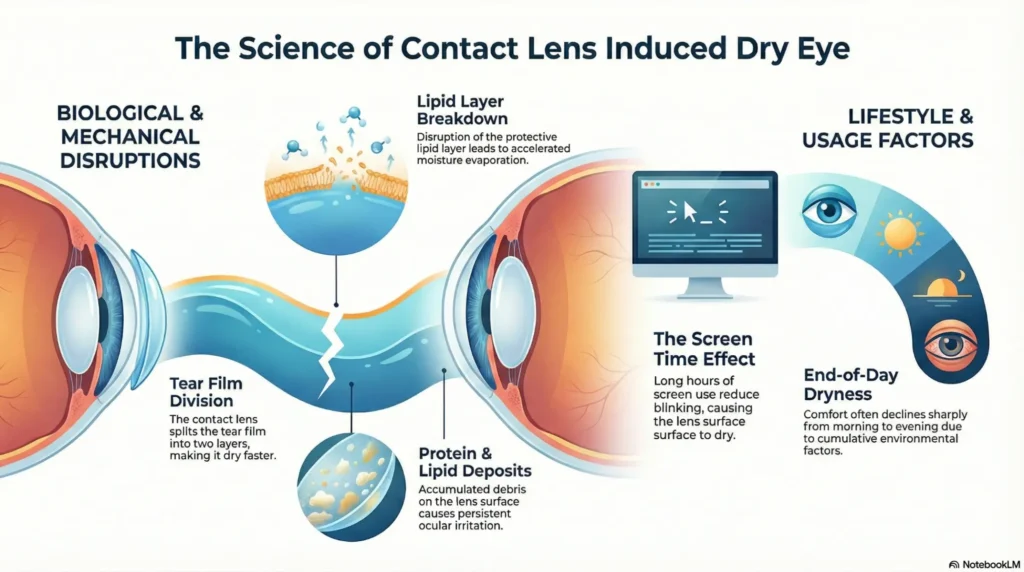
A few things happen when you wear lenses:
- The tear film becomes split into two layers, making it more prone to drying.
- The protective lipid layer may be disrupted, leading to faster evaporation.
- Long screen hours reduce blinking, leading to dryness on the lens surface.
- Deposits can accumulate on the lens, further irritating the eye.
This is why many lens wearers experience end‑of‑day dryness, even if they felt perfectly comfortable in the morning.
The good news?
All of this can be managed with appropriate preventive steps, lens material selection, and a care routine.
How Can I Prevent Dry Eye While Wearing Contact Lenses?
Here are practical, patient‑friendly strategies we recommend:
1. Care for your eyes during screen time
When you watch something on digital media, your blink rate decreases. This dries the eye faster, especially with lenses on.
- Position your screen slightly below eye level.
- Follow the 20‑20‑20 rule (every 20 minutes, look 20 feet away for 20 seconds)
- Make a habit of full, intentional blinking
These are small changes, but they make a big difference to tear stability.
2. Improve your surroundings
- Use a humidifier in dry, air‑conditioned rooms
- Avoid sitting directly under fans or vents
- Stay hydrated
Use moist‑heat compresses to improve natural oil secretion
3. Support your tear film naturally
- Omega‑3 supplements can help improve tear quality over time
- Choose eye makeup that is gentle and non‑migrating
- Avoid applying kajal/eyeliner on the inner waterline if you wear lenses
What Types of Lenses Work Best for Dry Eyes?
Daily disposable lenses
They stay cleaner, accumulate fewer deposits, and therefore, are the healthiest option for dryness‑prone eyes.
Water‑gradient lenses
Modern lenses, such as those with water‑gradient or SMARTSURFACE technology, mimic the natural tear film and offer much better all‑day comfort for dry eye patients.
These are excellent choices if you experience frequent dryness but want to continue lens wear.
Can Switching Lens Material Help?
Absolutely.
Lens technology has evolved tremendously, and the material you wear plays a major role in comfort.
Silicone Hydrogel Lenses
These allow more oxygen to reach the cornea and maintain better eye health.
Water‑gradient and biomimetic lenses
These lenses stay moist on the surface throughout the day, reducing friction with the eyelid and helping you see and feel better for longer.
Scleral lenses for severe dryness
If standard soft lenses are not tolerated, scleral lenses may be prescribed.
They vault over the cornea and create a constant reservoir of fluid, offering exceptional relief and vision in moderate to severe dry eye cases.
How Should I Care for My Contact Lenses to Reduce Dry Eye?
Even the best lens can feel uncomfortable if not properly cared for.
For monthly/bi‑weekly lenses, follow this routine:

Dry Eye Doesn’t Mean You Must Stop Wearing Lenses
Dry eye is common but very treatable.
With the right diagnosis, lens type, and care routine, most people continue wearing contact lenses comfortably.
If your lenses feel dry, blurry, or uncomfortable, don’t ignore the symptoms. A customised dry‑eye and tear‑film assessment from an eye specialist can help identify the cause and guide you toward the best lens choice for your eyes.
At Aggarwal Eye Hospital, we aim to keep your vision clear and your eyes happy, whether you choose spectacles, lenses, or advanced dry‑eye therapies.